
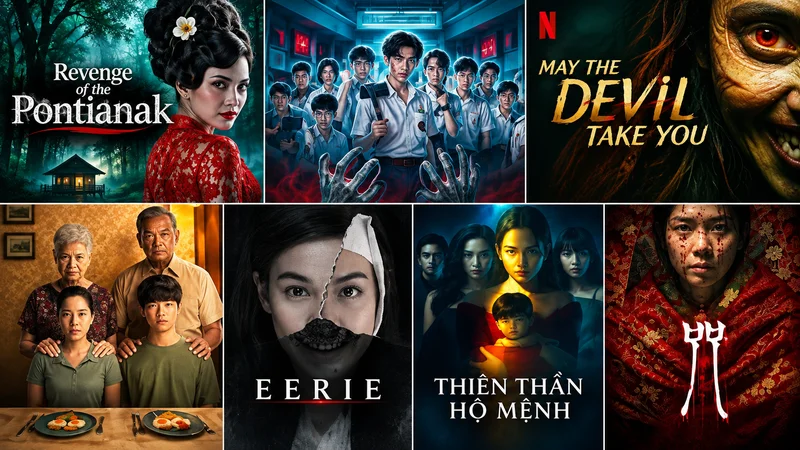
The best asian horror movies offer far more than pale ghosts and sudden jump scares. Japanese filmmakers turn videotapes and empty corridors into sources of dread, South Korean directors connect supernatural mysteries with fractured families, and Southeast Asian cinema draws on distinct local traditions of spirits, curses, and haunted places. This collection brings together 45 films from across the continent, including classics, cult discoveries, and recent releases. Readers exploring movie recommendations on NetShort can find a starting point for psychological suspense, brutal survival, folklore, or dark comedy.
Begin with Ringu or Shutter for accessible curse mysteries, A Tale of Two Sisters for psychological tension, and Train to Busan for emotional zombie action. The Wailing and Exhuma reward patience with Korean ritual horror, while Satan’s Slaves and Impetigore reveal the strength of contemporary Indonesian filmmaking. Other highlights include Hong Kong’s Mr. Vampire, Taiwan’s Incantation, India’s Tumbbad, Malaysia’s Roh, and Vietnam’s The Housemaid. Each offers a different cultural and cinematic approach rather than one interchangeable regional formula.
The list is a curated selection grouped by film tradition rather than a formal ranking of critical scores. Release years refer to original premieres where festival and theatrical dates differ, and a few such cases are noted in the entries. Some titles involve graphic violence, sexual assault, suicide, child endangerment, or disturbing religious imagery, so check local age guidance before watching. The discussions avoid major ending spoilers and distinguish genuinely supernatural horror from psychological thrillers or horror comedy.
What Makes Asian Horror Cinema So Distinctive?
- Different ghost traditions: Japanese onryo stories, Korean shamanic practices, and Southeast Asian spiritual beliefs have distinct histories and meanings.
- Family and social pressure: Grief, obligation, class, and community expectations frequently shape the characters’ fears.
- Creative filmmaking: Restrained sound design, unsettling long takes, surreal editing, and practical creature effects produce very different kinds of terror.
- Genre variety: The films include psychological mysteries, occult thrillers, zombie action, gothic romance, body horror, and comedy.
- Audience fit: A quiet folk tale and an extreme splatter movie should not be treated as equally suitable for every horror fan.
The best asian horror movies cannot be reduced to a single visual trope or national identity. Language, folklore, censorship, and filmmaking traditions change substantially across the countries represented below. Rather than assuming every unfamiliar ritual is an invented supernatural rule, approach each story on its own terms and use the notes to find a style that interests you.
Japanese Horror: Cursed Media, Folklore, and Psychological Fear
Japan offers some of the best asian horror movies for viewers who appreciate patience and an uneasy relationship between daily life and the supernatural. These twelve films range from traditional ghost tales to experimental body horror and self-aware comedy.
1. Onibaba (1964)
- Director: Kaneto Shindo
- Genre: Period folk horror
- Key highlight: A demonic mask enters the lives of two women surviving a war
In a field of towering reeds during a medieval conflict, two women survive by ambushing passing soldiers and selling their possessions. The return of a man connected to their family disrupts their relationship, and a mysterious mask becomes a means of intimidation. Kaneto Shindo uses the movement of the reeds and the sound of the wind to make the landscape feel alive. Desire and fear are closely entwined, with unsettling implications about survival and power. Choose it for stark black-and-white photography and folk horror rooted in human conflict, with adult sexual material and violence.
2. Kwaidan (1964)
- Director: Masaki Kobayashi
- Genre: Japanese ghost-story anthology
- Key highlight: Four elaborate folk tales unfold inside painted, dreamlike worlds
Masaki Kobayashi adapts four supernatural stories with meticulously controlled sets, rich color, and eerie musical textures. Instead of connecting the episodes through a single modern protagonist, the film lets each tale explore a different encounter with the spirit world, including the consequences of broken promises. The deliberate pacing and theatrical scenery are essential to its effect. Some references list 1965, reflecting international release and festival recognition, while Japanese film sources date its production and original premiere to 1964. Choose it for grand visual poetry and a haunting exploration of obligation rather than rapid scares.
3. House (1977)
- Director: Nobuhiko Obayashi
- Genre: Surreal haunted-house horror comedy
- Key highlight: Schoolgirls enter a mansion where ordinary objects become dangerous
A teenage girl travels with friends to her aunt’s country home, where the building begins behaving according to increasingly impossible rules. Nobuhiko Obayashi uses animation, strange transitions, miniature tricks, and deliberately artificial colors to create something closer to a feverish fairy tale than a conventional ghost mystery. The movie is funny and shocking in rapid alternation, making it unpredictable even for experienced horror viewers. Some effects are playful, but violence and disturbing images make this an adult-leaning cult pick. Choose it for wildly inventive filmmaking and a reminder that horror does not have to look realistic to feel strange.
4. Tetsuo: The Iron Man (1989)
- Director: Shinya Tsukamoto
- Genre: Industrial science fiction body horror
- Key highlight: A man’s body transforms into a nightmare of metal
A salaryman begins undergoing a horrifying physical transformation as human flesh and industrial materials merge. Shinya Tsukamoto turns frantic editing, abrasive sound, and grimy black-and-white images into a short but punishing cinematic experience. Conventional character psychology matters less than the sensation of a body becoming unfamiliar. Its sexual imagery and extreme body horror are intentionally confrontational, making it a poor choice for viewers who dislike graphic transformation scenes. Choose it for experimental filmmaking that takes technological anxiety into an almost abstract physical nightmare.
5. Cure (1997)
- Director: Kiyoshi Kurosawa
- Genre: Hypnotic crime and psychological horror
- Key highlight: A detective investigates murders committed by seemingly ordinary people
Detective Takabe notices an alarming pattern in killings whose perpetrators appear unable to explain their behavior. Kiyoshi Kurosawa resists the usual rush toward revelations, instead using empty rooms, repetitive questions, and unusual silences to suggest that identity itself can become unstable. Koji Yakusho gives the detective a weary determination that gradually becomes its own vulnerability. This is a crime mystery with horror at its core, not a conventional ghost story, and the violence can be disturbing. Choose it for dread that lingers in ordinary conversations long after a scene ends.
6. Ringu (1998)
- Director: Hideo Nakata
- Genre: Cursed videotape and supernatural mystery
- Key highlight: A reporter investigates a recording linked to mysterious deaths
Journalist Reiko tries to understand why viewers of an unsettling videotape may die after a short deadline. Hideo Nakata makes a domestic object into a source of dread, while the investigation gradually uncovers a history of cruelty and unresolved emotion. The film is powerful because so much of the danger arrives through anticipation rather than continuous violence. It launched an international wave of interest in Japanese supernatural horror. Choose this original Japanese film rather than the 2002 American remake when exploring the origins of the cursed-media concept.
7. Audition (1999)
- Director: Takashi Miike
- Genre: Psychological horror and extreme thriller
- Key highlight: A widower finds romance through a staged casting process
A widower searching for companionship participates in a false audition designed to introduce him to potential partners. The apparent romantic drama gradually takes a deeply threatening direction, with Takashi Miike making early signs of unease easy to overlook. Its shifts in tone are central to the experience, so knowing too much beforehand can weaken the effect. The later material is exceptionally graphic and psychologically distressing, including torture. Choose it for patient, confrontational horror that examines control and objectification, not for a light romantic mystery.
8. Pulse (2001)
- Director: Kiyoshi Kurosawa
- Genre: Technological ghost horror
- Key highlight: Unsettling computer messages accompany a spreading loneliness
Friends and strangers begin encountering strange images and disturbing incidents linked to computers and sealed rooms. Kiyoshi Kurosawa treats the early internet as an extension of urban isolation rather than a convenient tool for quick shocks. The nearly empty cityscapes suggest a world slipping away from human contact, and the film becomes increasingly apocalyptic without relying on constant spectacle. Also known as Kairo, it should not be confused with the later American remake. Choose it for quiet existential dread and a haunting account of how communication technology can make people feel even more alone.
9. Dark Water (2002)
- Director: Hideo Nakata
- Genre: Domestic ghost story
- Key highlight: A mother and daughter move into a leaking apartment with a troubled past
Yoshimi attempts to rebuild a stable life for herself and her daughter amid a custody dispute, but their apartment building develops increasingly disturbing signs of another presence. Hideo Nakata transforms dripping ceilings, a small bag, and neglected corridors into an atmosphere of persistent dread. The emotional center is parental responsibility and grief rather than an elaborate mythology. Its slower pace may surprise viewers expecting action or gore, but the domestic vulnerability is deeply effective. Choose the Japanese original for a sorrowful supernatural mystery that makes ordinary housing problems frightening.
10. Ju-on: The Grudge (2002)
- Director: Takashi Shimizu
- Genre: Nonlinear haunted-house curse
- Key highlight: Visitors to one Tokyo house become trapped in a deadly pattern
People connected to a seemingly ordinary home encounter a curse that follows them far beyond the property. Takashi Shimizu constructs the story through interlocking episodes, making the audience piece together an unsettling pattern of recurring presences and sounds. The film is especially effective because escape does not follow the familiar rules of a haunted-house story. It screened in 2002 and had its Japanese theatrical release in 2003, so both dates appear in catalogs. Choose this Japanese theatrical feature for an influential approach to fear that does not depend on explaining every supernatural detail.
11. Noroi: The Curse (2005)
- Director: Koji Shiraishi
- Genre: Occult mockumentary
- Key highlight: A missing documentary filmmaker leaves behind connected mysteries
A paranormal researcher gathers interviews, television clips, and apparently unrelated evidence before disappearing under troubling circumstances. Koji Shiraishi structures the film as a completed investigation assembled from scattered materials, inviting viewers to become detectives themselves. The accumulation of small details creates dread more effectively than sudden attacks, while the fictional documentary format gives ordinary places an unsettling credibility. Its cultural references and fragmented timeline require close attention. Choose it for a slow, intricate occult mystery that rewards patience and may provoke a second viewing.
12. One Cut of the Dead (2017)
- Director: Shinichiro Ueda
- Genre: Zombie horror comedy and filmmaking satire
- Key highlight: A low-budget zombie production becomes part of the joke
A film crew shooting a zombie movie encounters a nightmare that seems to blur the lines between staged scares and actual danger. Shinichiro Ueda uses an audacious structure that changes how the audience interprets the opening material, making plot details unusually easy to spoil. The movie starts in deliberately rough, chaotic territory before developing a more affectionate perspective on collaborative creativity. It contains zombie violence, but humor and ingenuity are the major attractions. Choose it for a fresh kind of horror comedy, and avoid detailed explanations of its later sections.
South Korean Horror: Family Secrets, Rituals, and Survival
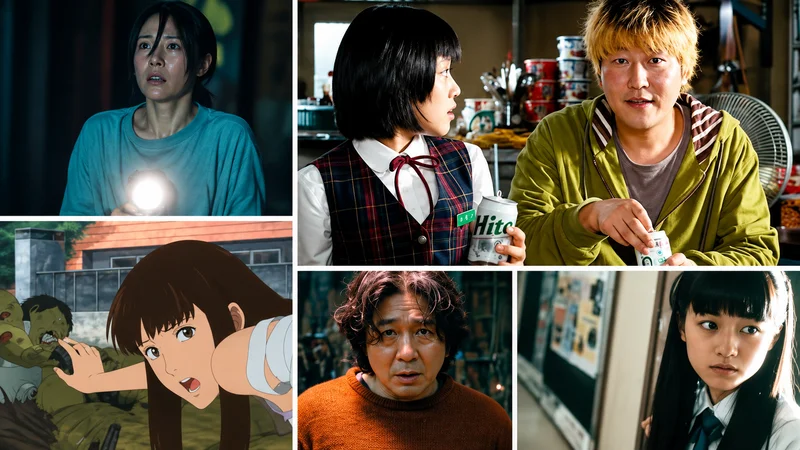
South Korean filmmakers often connect the supernatural to family, class, social institutions, and historical trauma. The best asian horror movies in this group range from restrained domestic unease to high-energy zombie action and elaborate ritual mysteries.
13. The Housemaid (1960, South Korea)
- Director: Kim Ki-young
- Genre: Domestic psychological horror
- Key highlight: An ambitious household becomes trapped by dangerous tensions
A music teacher and his family hire a housemaid whose presence disrupts the carefully maintained hierarchy of their new home. Kim Ki-young makes stairs, doorways, and cramped domestic spaces central to a cruel story about desire, class, and anxiety over respectability. Its black-and-white visuals create an oppressive atmosphere without supernatural monsters. The film is very different from the later Vietnamese horror title The Housemaid, despite their shared English name. Choose it for an early landmark of South Korean domestic horror and a challenging portrait of power inside an ordinary family.
14. Whispering Corridors (1998)
- Director: Park Ki-hyung
- Genre: School ghost mystery
- Key highlight: A girls’ school conceals frightening violence and authoritarianism
A series of strange incidents at an all-girls school suggests that memories of mistreatment have not disappeared from its corridors. Park Ki-hyung combines supernatural images with an unflattering look at rigid discipline and the pressure placed on students. Its ghostly atmosphere is inseparable from institutional cruelty, making the school frightening long before an apparition appears. The film helped renew mainstream interest in Korean horror and inspired an anthology-like series of related films. Choose it for a haunting school setting, while recognizing its references to abuse and student suicide.
15. A Tale of Two Sisters (2003)
- Director: Kim Jee-woon
- Genre: Psychological and supernatural family horror
- Key highlight: Two sisters return to a beautiful home filled with painful secrets
After a period away, Su-mi and her younger sister return to the family house, where a tense relationship with their stepmother and disturbing events threaten any sense of normal life. Kim Jee-woon carefully arranges interiors, colors, and sound to make the residence feel both elegant and hostile. The story draws from Korean folklore yet plays with memory and perception in ways that reward close attention. Avoid spoilers, since important developments alter how earlier scenes are understood. Choose it for emotionally intense mystery rather than straightforward ghost attacks.
16. The Host (2006)
- Director: Bong Joon-ho
- Genre: Creature feature and family satire
- Key highlight: A monster attack on Seoul’s Han River splits a struggling family
When an enormous creature emerges from the Han River, a disorganized family fights to rescue a missing girl despite confused public authorities. Bong Joon-ho combines frightening action with family humor, grief, and pointed social observations, refusing to separate the monster from the institutions responding to it. Song Kang-ho makes the imperfect father both frustrating and deeply human. It is more energetic than many Korean ghost mysteries and includes intense attacks and threatening situations involving a child. Choose it for a creature film with memorable characters and a critique of power beneath the spectacle.
17. Thirst (2009)
- Director: Park Chan-wook
- Genre: Erotic vampire horror and black comedy
- Key highlight: A priest develops a craving for blood after a medical experiment
Catholic priest Sang-hyun volunteers for experimental treatment and survives under extraordinary circumstances, only to discover unsettling new physical desires. His growing involvement with a woman in an unhappy marriage makes the supernatural predicament a moral crisis rather than a simple fight against monsters. Park Chan-wook favors vivid imagery, uncomfortable humor, and contradictory feelings about intimacy. The violence and sexual material are substantial, so it is strictly adult viewing. Choose it for vampire cinema that uses the curse to explore appetite, guilt, and choices that cannot be easily reversed.
18. The Wailing (2016)
- Director: Na Hong-jin
- Genre: Rural occult investigation
- Key highlight: A policeman investigates violent illness and mysterious rituals
A string of disturbing events in a mountainous village pushes local policeman Jong-gu toward increasingly frightening explanations as his own family becomes involved. Na Hong-jin builds the story through conflicting interpretations, strange behavior, and rituals whose meanings cannot be assumed from appearances. The landscape feels isolated, and occasional dark humor makes the later dread even more uncomfortable. Its long runtime rewards patience, but the uncertainty is the point. Choose it for a layered supernatural mystery with difficult moral decisions and imagery that is sometimes extremely distressing.
19. Train to Busan (2016)
- Director: Yeon Sang-ho
- Genre: Zombie survival action
- Key highlight: Passengers try to survive an outbreak aboard a moving train
Seok-woo boards a train with his young daughter just as a violent infection spreads, trapping strangers together in a series of increasingly dangerous compartments. Yeon Sang-ho builds suspense around the geography of the train and the uneven willingness of passengers to cooperate. The father-daughter relationship provides emotional weight while the film examines selfishness and solidarity under pressure. It is fast, frightening, and often heartbreaking, with intense zombie violence. Choose it for a broadly accessible entry into Korean horror that combines memorable action with unusually strong human stakes.
20. Gonjiam: Haunted Asylum (2018)
- Director: Jung Bum-shik
- Genre: Live-stream found-footage horror
- Key highlight: Online hosts explore an abandoned institution for views
A web-horror crew enters an abandoned psychiatric hospital expecting an attention-grabbing broadcast but gradually loses control of the production. Jung Bum-shik makes effective use of body-mounted cameras and the tension between staged reactions and genuine fear. The ruined interiors and restricted views create claustrophobia, while the live-stream format gives the characters a reason to keep recording when sensible people would leave. Although influenced by a real institution’s reputation, this is a fictional narrative. Choose it for immersive jump scares and increasing panic rather than extensive gore.
21. Sleep (2023)
- Director: Jason Yu
- Genre: Domestic psychological horror
- Key highlight: A newlywed couple fears what happens after the husband falls asleep
Hyun-su begins displaying alarming nighttime behavior, leaving his pregnant wife Soo-jin desperate to understand whether the problem is medical, psychological, or supernatural. Jason Yu keeps the action concentrated in the couple’s apartment, turning familiar beds and rooms into spaces of uncertainty. Jung Yu-mi and Lee Sun-kyun give the relationship warmth before exhaustion and fear begin to undermine trust. The movie allows dark comedy to coexist with dread while posing uncomfortable questions about protecting loved ones. Choose it for compact, character-centered horror with a strong everyday premise.
22. Exhuma (2024)
- Director: Jang Jae-hyun
- Genre: Shamanic mystery and folk horror
- Key highlight: A troubled family hires specialists to relocate an ancestral grave
A shaman, her associate, a geomancer, and a mortician investigate a wealthy family’s mysterious affliction and trace it to a burial site that should have been left alone. Jang Jae-hyun treats the investigation as professional work, allowing different forms of expertise to interact before the supernatural threat deepens. Kim Go-eun and Choi Min-sik give the ritual sequences weight, while the story draws upon Korean burial traditions and historical anxieties. Choose it for intricate occult suspense rather than generic possession scenes. Some elements depend on cultural context, making careful viewing particularly rewarding.
Thai Horror: Photography, Neighborhood Ghosts, and Spirit Rituals
Thai horror can be intimate, theatrical, and unexpectedly funny. The best asian horror movies from Thailand here encompass cursed photographs, domestic anxieties, interconnected scares, and spirit-medium traditions.
23. Shutter (2004)
- Director: Banjong Pisanthanakun and Parkpoom Wongpoom
- Genre: Supernatural photography mystery
- Key highlight: Disturbing shapes appear in photographs after a nighttime accident
Photographer Tun and his girlfriend Jane begin finding unexplained figures in their pictures after a serious road incident. The images become evidence of a troubling history that the couple would prefer not to face. The directing duo combines recognizable modern technology with Thai ghost storytelling, making a portrait or developed photograph feel capable of accusing its viewer. The fear is strengthened by an underlying theme of guilt rather than random haunting. Choose the 2004 Thai original over the later American remake, and be aware of material related to sexual violence.
The international success of titles such as Shutter, Ringu, and A Tale of Two Sisters shaped a wider wave of horror in the new millennium. For more films from that era, see our best 2000s horror movies selection, which places these Asian productions alongside influential works from Europe and North America.
24. 4bia (2008)
- Director: Banjong Pisanthanakun, Paween Purijitpanya, Youngyooth Thongkonthun, and Parkpoom Wongpoom
- Genre: Thai horror anthology
- Key highlight: Four standalone situations produce different kinds of fear
Also known as Phobia, this anthology moves between isolated communication, teenage encounters, and dangerous travel, giving four directors space for distinct approaches to suspense. The episodes are short enough to create a varied horror night without requiring a long commitment to one mythology. The contrasts in pacing, sound, and humor make the film useful for viewers discovering Thai genre cinema. It includes frightening images and adult themes, and not every segment will appeal equally. Choose it for variety and a chance to compare different filmmaking styles within one feature.
25. Laddaland (2011)
- Director: Sophon Sakdaphisit
- Genre: Suburban haunted-family drama
- Key highlight: A family’s new house becomes a source of financial and supernatural anxiety
A father moves his wife and children into a housing development, hoping to give them a more stable future, but unsettling events begin exposing existing pressures within the family. Sophon Sakdaphisit uses the planned neighborhood as a visual contrast between the dream of middle-class security and the fear of losing control. The ghostly incidents work best because they intensify ordinary disagreements over work, responsibility, and trust. Choose it for a more emotionally grounded Thai haunting, with distressing domestic and violent material alongside the supernatural elements.
26. Pee Mak (2013)
- Director: Banjong Pisanthanakun
- Genre: Folkloric ghost romance and horror comedy
- Key highlight: A returning soldier refuses to accept rumors about his wife
Mak comes home from war to reunite with his wife Nak, while his friends become convinced that something about the household is terribly wrong. Banjong Pisanthanakun reimagines a familiar Thai ghost legend through comic friendship, romantic devotion, and bursts of supernatural fear. The humor often comes from the men’s escalating attempts to test their suspicions without upsetting Mak. Despite its playful energy, the movie still contains chilling scenes. Choose it for a culturally distinctive horror comedy that offers a welcome change from relentlessly bleak curse films.
27. The Medium (2021)
- Director: Banjong Pisanthanakun
- Genre: Mockumentary possession and Thai folk horror
- Key highlight: A documentary crew follows a family of spirit mediums in Isan
Filmmakers investigate a shamanic family in northeastern Thailand, where unsettling changes in a younger relative raise questions about inheritance, belief, and what force is truly present. The mockumentary method initially emphasizes observation, allowing the later escalation to feel increasingly invasive. Banjong Pisanthanakun directs a Thai-Korean co-production whose setting and rituals matter to its identity. The imagery becomes extreme and upsetting, including threats to family members. Choose it for an intense ritual-horror experience, not as a factual guide to actual religious practices.
Indonesian Horror: Inherited Curses and Rural Nightmares
Indonesian filmmakers connect supernatural fear to family histories, religious anxieties, and local tales without using a single fixed set of rules. These four picks are serious, intense contributions to contemporary horror.
28. Satan’s Slaves (2017)
- Director: Joko Anwar
- Genre: Family possession and occult mystery
- Key highlight: Siblings confront terrifying events after their mother dies
Rini and her brothers are already struggling with financial hardship and a mother’s prolonged illness when her death brings increasingly frightening disturbances into their home. Joko Anwar lets domestic responsibility drive the suspense, giving the siblings a reason to remain together even when each new discovery makes the house less safe. The film draws on the title and legacy of an earlier Indonesian horror movie but stands on its own for newcomers. Choose it for atmosphere, sound design, and a frightening mixture of family grief and occult mystery.
29. May the Devil Take You (2018)
- Director: Timo Tjahjanto
- Genre: Demonic possession and survival horror
- Key highlight: An estranged family uncovers an occult secret in an old house
Alfie visits a neglected property linked to her seriously ill father, where members of an estranged family encounter evidence of a disturbing agreement from the past. Timo Tjahjanto builds from uneasy investigation into aggressive supernatural violence, using confined rooms and sudden transformations to push the characters into desperate survival. The family tensions prevent the movie from becoming a simple collection of effects. Its pace, graphic content, and frantic energy make it more intense than a slow ghost mystery. Choose it if you want a forceful Indonesian demonic thriller.
30. Impetigore (2019)
- Director: Joko Anwar
- Genre: Rural curse and folk horror
- Key highlight: A woman returns to an ancestral village hiding a terrible secret
Maya travels with a friend to a remote village after learning that her family may have left her an inheritance. The apparently quiet community is bound to a frightening history, and each polite encounter makes her increasingly uncertain about whom to trust. Joko Anwar uses rural landscapes, puppetry, and ritual ideas to explore the dangers of inheritance and communal belief. Its violent imagery can be severe, but the mystery gives the fear a strong narrative engine. Choose it for a vividly realized folk nightmare with one of the region’s more distinctive settings.
31. The Queen of Black Magic (2019)
- Director: Kimo Stamboel
- Genre: Supernatural revenge and body horror
- Key highlight: Former residents return to an orphanage where the past refuses to stay buried
Three men visit the orphanage where they grew up, bringing their families to reconnect with an elderly caretaker. Disturbing incidents soon reveal that the place is bound to an unforgiven history. Kimo Stamboel uses grotesque physical effects and a tightening ensemble mystery to turn shared memories into a threat. Joko Anwar wrote the screenplay, a distinction from the director credit that is easy to confuse. This reimagining of an older Indonesian film is extremely graphic, especially in its body-horror imagery. Choose it for relentless, adult supernatural punishment horror.
Hong Kong and Taiwan: Hopping Vampires, Haunted Eyes, and Modern Curses
Hong Kong horror often mixes martial arts, supernatural romance, and physical comedy, while contemporary Taiwanese films bring historical trauma and internet-age rituals into the foreground. This group includes co-productions as well as different horror traditions.
32. Mr. Vampire (1985, Hong Kong)
- Director: Ricky Lau
- Genre: Jiangshi horror comedy
- Key highlight: A Taoist priest confronts a reanimated hopping corpse
A priest and his disciples attempt to manage a dangerous reanimated corpse whose movement follows the distinctive rules of Chinese jiangshi folklore. Ricky Lau combines rituals, acrobatics, and slapstick timing, allowing the creature to be threatening and absurd in quick succession. The physical performances make the supernatural rules entertaining to watch even when unfamiliar to international audiences. This is a very different vampire tradition from the European aristocratic model. Choose it for an influential Hong Kong genre hybrid and a more playful introduction to regional monster cinema.
33. A Chinese Ghost Story (1987, Hong Kong)
- Director: Ching Siu-tung
- Genre: Supernatural romance and fantasy horror
- Key highlight: A traveling scholar falls for a spirit bound to a dangerous force
A modest tax collector takes shelter at an abandoned temple and meets a mysterious woman whose circumstances make their attraction dangerous. Ching Siu-tung merges martial arts energy, romance, eerie creatures, and fantasy spectacle with a lightness that distinguishes the film from a straightforward haunting. Leslie Cheung and Joey Wong give the central relationship charm amid elaborate supernatural confrontations. Some viewers may classify it primarily as fantasy romance, and that crossover is precisely its appeal. Choose it for a visually inventive Hong Kong classic that does not restrict horror to sorrow or silence.
34. The Eye (2002, Hong Kong and Singapore)
- Director: Danny Pang and Oxide Pang
- Genre: Medical ghost mystery
- Key highlight: A cornea transplant reveals unsettling figures that others cannot see
After receiving a corneal transplant, a young woman begins seeing people and events that no one else appears able to perceive. The Pang brothers make the improvement of ordinary sight into a frightening loss of certainty, turning crowded public spaces into settings where danger can appear without warning. The film combines ghost encounters with a mystery about the donor’s past, giving its supernatural shocks emotional consequences. It is a Hong Kong and Singapore co-production, not simply a Thai film despite the directors’ backgrounds. Choose it for an accessible, frightening supernatural mystery.
35. Rigor Mortis (2013, Hong Kong)
- Director: Juno Mak
- Genre: Jiangshi Gothic and apartment-block horror
- Key highlight: A troubled actor discovers dark forces inside a housing complex
A despairing actor moves into an aging residential building and encounters tenants whose lives are connected to disturbing supernatural events. Juno Mak revisits Hong Kong’s hopping-vampire tradition with a much darker atmosphere than the 1980s comedies that inspired it. The apartment block becomes a densely populated Gothic setting, full of memories and unresolved grief. Its effects are often grotesque, and the story involves suicide-related themes. Choose it for an adult reimagining of familiar folklore rather than expecting the playful tone of Mr. Vampire.
36. Detention (2019, Taiwan)
- Director: John Hsu
- Genre: Historical and supernatural school horror
- Key highlight: Students confront nightmarish repression inside a deserted school
In 1960s Taiwan, a schoolgirl finds familiar classrooms transformed into terrifying spaces connected with forbidden reading and political persecution. John Hsu adapts the video game of the same name into a film that combines ghosts and monsters with the island’s history of authoritarian repression. The supernatural imagery communicates fear of surveillance and punishment, giving the setting historical weight beyond its jump scares. Choose it for horror that treats personal guilt and political memory as linked concerns. Its grim themes require more attention than a conventional haunted-school thriller.
37. The Sadness (2021, Taiwan)
- Director: Rob Jabbaz
- Genre: Extreme outbreak and splatter horror
- Key highlight: A mutated infection drives people toward horrifying acts of violence
A young couple tries to reconnect as an outbreak turns ordinary citizens into perpetrators of sadistic violence. Rob Jabbaz directs the action with relentless intensity, using the city’s public spaces to show how quickly social trust can disappear. The infected are particularly disturbing because they retain a cruel awareness of their actions, making the threat very different from mindless zombies. This is among the most extreme selections here, including sexual violence, mutilation, and graphic bodily harm. Choose it only with a strong tolerance for explicit horror; it is not a casual survival thriller.
38. Incantation (2022, Taiwan)
- Director: Kevin Ko
- Genre: Found-footage ritual curse
- Key highlight: A mother documents a curse while trying to protect her daughter
Ruo-nan records the events that brought a dangerous curse into her family’s life, inviting viewers to interpret footage and repeated symbols alongside her. Kevin Ko uses found footage and direct address to make the audience feel implicated in the ritual mystery, an effect strengthened by the film’s relationship to online confessionals and chain messages. The maternal stakes give the formal trick an emotional center. Choose it for an immersive Taiwanese curse story that builds tension through participation, with disturbing images and threats involving a child.
Indian Horror: Greed, Village Legends, and Black-and-White Folklore
Indian horror ranges across languages and styles rather than belonging to a single national formula. These three selections demonstrate Gothic folklore, supernatural comedy, and a more austere approach to fear.
39. Tumbbad (2018)
- Director: Rahi Anil Barve
- Genre: Period folk horror
- Key highlight: A family’s pursuit of hidden wealth becomes a curse across generations
Vinayak grows fascinated by a dangerous source of wealth connected to a forgotten supernatural being, carrying his obsession through changing periods of Indian history. The rain-soaked setting and elaborate creature imagery make greed feel almost physically contagious. The film uses mythology and class tension to give the quest an increasingly tragic shape. BFI credits Rahi Anil Barve as director, while another BFI profile also names Adesh Prasad, so credit listings can differ. Choose it for ambitious Indian folk horror whose atmosphere and moral concerns are inseparable.
40. Stree (2018)
- Director: Amar Kaushik
- Genre: Hindi-language folklore horror comedy
- Key highlight: A town fears a female spirit that attacks men during a festival
In the town of Chanderi, residents observe strange precautions against a spirit believed to prey on men during an annual celebration. Rajkummar Rao plays a young tailor whose personal life becomes entangled with the legend, while the supporting cast provides quick, affectionate banter. Amar Kaushik balances supernatural scares with community humor and questions about the assumptions people make about women. The film belongs here as a lighter entry with genuine ghostly suspense rather than relentless violence. Choose it for an engaging horror comedy that uses local folklore to challenge social habits.
41. Bramayugam (2024)
- Director: Rahul Sadasivan
- Genre: Malayalam-language period folk horror
- Key highlight: A wandering singer enters a mansion ruled by an ominous host
Thevan, a singer escaping danger, seeks shelter in a remote manor where the hospitality of its powerful owner soon feels like another kind of captivity. Rahul Sadasivan stages the story in expressive black and white, allowing the building and its rituals to suggest a world governed by unequal power. Mammootty brings imposing presence to the mysterious host, while Arjun Ashokan gives the visitor an increasingly desperate perspective. Choose it for slow, atmospheric Indian horror that blends folklore with class and control, not for fast-moving jump scares.
The Philippines, Malaysia, and Vietnam: Overlooked Regional Nightmares
Exploring the best asian horror movies also means moving beyond the most internationally familiar production centers. These four selections offer haunted objects, school mysteries, forest spirits, and a Vietnamese Gothic romance.
42. Feng Shui (2004, Philippines)
- Director: Chito S. Roño
- Genre: Filipino cursed-object supernatural horror
- Key highlight: A lucky-looking bagua mirror brings frightening consequences
Joy acquires a decorative bagua mirror that appears to improve her fortunes, but people around her begin suffering horrifying events. Chito S. Roño uses an ordinary household object to connect superstition, luck, and the costs of personal ambition. Kris Aquino makes Joy’s growing concern persuasive as the apparent pattern becomes harder to dismiss. The film is rooted in a specifically Filipino domestic environment while borrowing imagery associated with Chinese fortune traditions. Choose it for a memorable cursed-object mystery that shows how horror can make an everyday gift frightening.
43. Eerie (2018, Philippines)
- Director: Mikhail Red
- Genre: Catholic school supernatural mystery
- Key highlight: A guidance counselor investigates disturbing events at a convent school
A guidance counselor working at a Catholic girls’ school begins probing a series of disturbing incidents linked to the institution’s past. Mikhail Red builds atmosphere around oppressive hallways, discipline, and the conflict between students’ needs and institutional authority. Bea Alonzo gives the investigator a humane interest in the girls whose stories are not being fully heard. The film premiered at a festival in 2018 and reached Philippine theaters in 2019, explaining the different years in listings. Choose it for religious Gothic imagery and a story concerned with secrecy inside a supposedly protective institution.
44. Roh (2019, Malaysia)
- Director: Emir Ezwan
- Genre: Malay-language rural folk horror
- Key highlight: A mother and children encounter an ominous girl in a forest
Living far from other people, a mother and her two children take in a strange young visitor whose warnings begin to reshape their sense of safety. Emir Ezwan lets the forest and sparse living conditions create suspense, making isolation feel like a spiritual and physical vulnerability. The film is restrained compared with louder possession movies and relies on unsettling encounters rather than an abundance of creature effects. It premiered in 2019 and reached wider audiences later. Choose it for a compact Malaysian folk nightmare that rewards close attention to mood and belief.
45. The Housemaid (2016, Vietnam)
- Director: Derek Nguyen
- Genre: Vietnamese Gothic romance and ghost horror
- Key highlight: A young servant enters a haunted French colonial plantation
In 1950s Vietnam, an orphaned young woman takes a position at a French-owned rubber plantation, where a forbidden romance develops amid stories of a vengeful presence. Derek Nguyen combines a Gothic mansion atmosphere with the historical tensions of colonial life and questions of unequal power. The setting gives the haunting more than decorative value, connecting personal desire with an uncomfortable political past. It is not the South Korean 1960 film of the same English title. Choose it for a Vietnamese supernatural romance with a distinctive historical backdrop.
Which Asian Horror Movies Should You Watch First?
Choosing a film by intensity and style is more useful than treating every Asian horror release as interchangeable. Ghost-story newcomers can begin with Ringu, Shutter, Dark Water, or The Eye, which each build a clear mystery around an everyday object or experience. Those interested in family tensions should consider A Tale of Two Sisters, Sleep, Laddaland, and Satan’s Slaves. Their emotional stakes help the frightening events matter beyond individual shocks.
For stronger action, Train to Busan and The Host provide high-energy threats without abandoning character relationships. Viewers who want to explore religious or folk traditions through fiction may prefer The Wailing, Exhuma, Tumbbad, Bramayugam, and Roh. These films draw on culturally specific imagery, but they are imaginative stories rather than reliable guides to real practices. Do not assume one film’s supernatural rules apply to another country or tradition.
More adventurous viewers can try House, Tetsuo: The Iron Man, or One Cut of the Dead for unusual filmmaking, or Mr. Vampire and Pee Mak for supernatural humor. Audition, The Queen of Black Magic, and The Sadness require particularly careful content checks because of explicit violence and distressing themes. The best asian horror movies offer many ways to feel afraid; finding the one that matches your tolerance is part of the experience.
Frequently Asked Questions About Asian Horror Movies
What are the best asian horror movies for beginners?
Ringu, Shutter, A Tale of Two Sisters, Train to Busan, and The Eye provide varied introductions to cursed media, ghost mysteries, psychological suspense, and zombie action. All contain frightening or mature material, so check their individual content guidance.
What is the difference between Japanese and Korean horror?
Japanese horror includes traditions of kaidan ghost tales, technological unease, and experimental body horror, while Korean films frequently emphasize family relationships, social pressure, historical experience, and shamanic mysteries. Neither national cinema follows one single formula.
Which Asian horror films are based on folklore?
Onibaba, Kwaidan, Pee Mak, The Wailing, Exhuma, Impetigore, Tumbbad, Bramayugam, and Roh draw in different ways on folk stories or spiritual traditions. They dramatize those influences rather than documenting religious practice.
Are there funny Asian horror movies?
Yes. Mr. Vampire combines jiangshi folklore with physical comedy, Pee Mak mixes romance with ghostly jokes, Stree brings humor to a local legend, and One Cut of the Dead experiments with zombie filmmaking. Their age suitability still varies.
Which Asian horror movies are especially violent?
Audition, Tetsuo: The Iron Man, The Queen of Black Magic, and The Sadness contain extreme or disturbing imagery. The Sadness is particularly graphic and includes sexual violence, making it unsuitable for viewers seeking relatively mild horror.
Final Thoughts
The best asian horror movies are most rewarding when viewers notice what makes each work distinct. An empty Japanese apartment, a Korean family grave, a Thai photograph, and an Indonesian village may all become frightening, but their stories connect fear to different relationships, beliefs, and histories. Those differences are the reason to explore more than one national tradition, not details to flatten into a generic definition of Asian horror.
Build a marathon around contrast: start with a quiet ghost mystery, follow it with a more physical creature or survival film, and finish with a folk tale or horror comedy. Comparing approaches can reveal more about cinematic fear than chasing the most extreme recommendation alone. A movie you expected to be unfamiliar may end up feeling surprisingly personal.