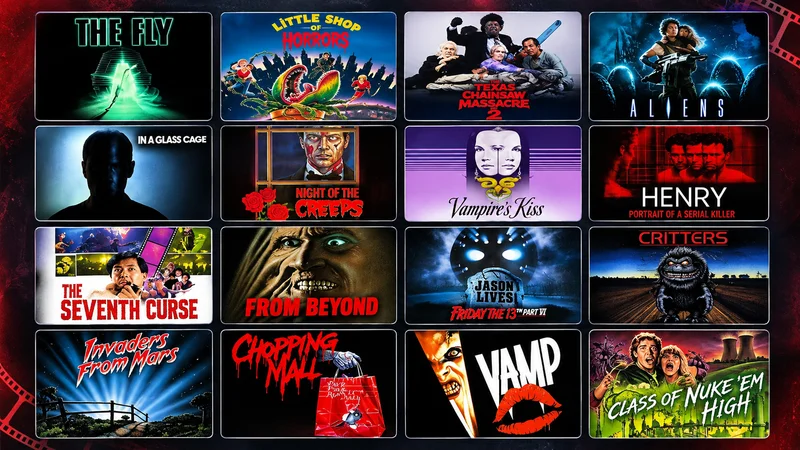
The best 80s horror movies did more than create famous masked killers. Between 1980 and 1989, filmmakers turned isolated hotels, suburban homes, remote research stations, and ordinary televisions into places of sustained dread. This selection brings together 45 important, entertaining, and sometimes deeply unsettling films across slashers, supernatural mysteries, body horror, monster stories, and dark comedy. Readers exploring film recommendations on NetShort can use this guide to find a frightening night that fits their taste.
Start with The Shining for psychological pressure, The Thing for distrust and practical effects, A Nightmare on Elm Street for a killer who invades dreams, or The Fly for tragic science fiction horror. Prefer supernatural investigations? Try The Changeling or Poltergeist. Horror fans looking for stranger experiences can move toward Possession, The Beyond, or Italian giallo, while Gremlins and The Monster Squad offer more playful monster entertainment.
The numbered films are grouped by type rather than presented as an objective ranking of scariness. Each entry identifies its director, subgenre, and standout feature before explaining what makes the film worth choosing. Years refer to the original film’s release period, with the few market-specific exceptions noted when relevant. Several titles contain extreme gore, sexual material, family trauma, or troubling portrayals, so they should not be treated as interchangeable family-night suggestions.
What Makes 1980s Horror Movies So Distinctive?
- Practical makeup effects gave monsters tangible bodies, from mutating aliens to werewolf transformations.
- Slashers and supernatural villains transformed summer camps, bedrooms, and neighborhoods into dangerous spaces.
- Paranoia, body horror, and technological anxiety made the decade far broader than masked killers alone.
- Cult filmmakers from Italy, France, Germany, and beyond pushed horror toward increasingly surreal territory.
- Horror comedy offered an alternative for viewers who wanted inventive monsters and a little relief from dread.
The best 80s horror movies are easiest to appreciate when their craft and tone are part of the decision. A slow ghost story like The Changeling asks for patience; a splatter comedy like Evil Dead II rewards a taste for chaos; and a film such as Videodrome favors disturbing questions over straightforward answers. The order below helps you move between those experiences without confusing popularity with suitability.
Haunted Places and Psychological Nightmares
The best 80s horror movies can turn a quiet home or familiar institution into a source of uncertainty. These stories generally favor atmosphere, family pressure, and slow revelations over a constant stream of attacks.
1. The Shining (1980)
- Director: Stanley Kubrick
- Genre: Psychological and supernatural horror
- Key highlight: The Overlook Hotel turns isolation into terror
Jack Torrance accepts a winter caretaker job at the isolated Overlook Hotel, bringing his wife Wendy and young son Danny with him. What begins as an opportunity to write becomes a nightmare shaped by the building, Jack’s worsening behavior, and Danny’s disturbing visions. Kubrick’s steady camera movements and impossible-feeling interiors make the hotel more frightening than any single apparition. Jack Nicholson’s performance is unforgettable, but Shelley Duvall gives the family’s fear its emotional urgency. Choose this for sustained psychological pressure, not quick relief from scares. Domestic violence, threatening behavior, and disturbing imagery make it a difficult film for younger viewers.
2. The Changeling (1980)
- Director: Peter Medak
- Genre: Ghost story and mystery
- Key highlight: A grieving composer investigates an old mansion
After losing his wife and daughter, composer John Russell moves into a large historic house and begins encountering unexplained sounds and signs of another presence. George C. Scott brings unusual restraint to the lead, making the investigation feel like a serious attempt to understand grief rather than an excuse for frantic screaming. Medak uses empty corridors, a staircase, and a child’s belongings to produce dread with remarkably little spectacle. The mystery gradually connects the haunting to a buried injustice. It is an excellent choice for viewers who prefer patient, sorrowful ghost stories to aggressive jump scares.
3. The Fog (1980)
- Director: John Carpenter
- Genre: Supernatural coastal horror
- Key highlight: A mysterious fog threatens a seaside town
As the residents of Antonio Bay prepare for a centennial celebration, a supernatural fog rolls toward the coast carrying a dangerous link to the town’s past. Carpenter creates atmosphere through radio broadcasts, lighthouse views, and the unsettling sight of something approaching across the water. Adrienne Barbeau’s isolated radio host gives the story a memorable perspective on a community under threat. The ghosts matter, but the lasting hook is the idea that an official celebration might conceal a terrible historical wrong. Watch this for slow-building maritime dread and an ensemble mystery rather than elaborate creature effects.
4. Poltergeist (1982)
- Director: Tobe Hooper
- Genre: Haunted-house and suburban horror
- Key highlight: Everyday household objects become threatening
The Freeling family enjoys an ordinary suburban home until strange disturbances begin centering on their youngest daughter, Carol Anne. What makes the setup so effective is the contrast between familiar domestic comfort and the sense that the house has become impossible to trust. Hooper’s film combines effects-driven spectacle with surprisingly recognizable family panic, while JoBeth Williams and Craig T. Nelson give the parents urgency. Its memorable supernatural imagery can be intense despite the approachable family setup. Choose it for a haunted-house movie that makes television screens, closets, and children’s bedrooms sources of fear.
5. The Dead Zone (1983)
- Director: David Cronenberg
- Genre: Psychic thriller and psychological horror
- Key highlight: A teacher sees terrible possibilities through touch
After awakening from a years-long coma, schoolteacher Johnny Smith discovers that touching another person can reveal events from the past or future. Christopher Walken makes Johnny’s gift feel more like an unwanted burden than a superhero ability. Cronenberg favors melancholy atmosphere and moral uncertainty over graphic shocks, allowing the question of how much responsibility comes with knowledge to drive the suspense. The Stephen King adaptation has political and emotional stakes as well as supernatural ones. It belongs here for viewers who prefer troubling choices and a haunted central performance to violent spectacle.
6. Prince of Darkness (1987)
- Director: John Carpenter
- Genre: Occult and science fiction horror
- Key highlight: A church basement conceals an impossible substance
A priest recruits researchers to examine a strange cylinder discovered beneath an old church, where apparently scientific investigation leads toward a horrifying spiritual explanation. Carpenter takes pleasure in blurring the boundary between physics and theology, making the group uncertain which rules govern their danger. The confined building and increasingly frightening transmissions give the film a distinctive doomsday atmosphere. Its ideas are ambitious, even when the performances and pacing feel more like a cult production than a polished blockbuster. Choose it for eerie dreams, religious dread, and a genuinely unusual supernatural premise.
7. Pet Sematary (1989)
- Director: Mary Lambert
- Genre: Supernatural and family tragedy
- Key highlight: Grief makes a dangerous burial ground irresistible
After moving with his family to rural Maine, doctor Louis Creed learns about a burial place whose unsettling power seems to offer a way around death. The Stephen King story examines what happens when overwhelming grief becomes more persuasive than common sense. Fred Gwynne’s Jud Crandall provides a memorable warning presence, while Lambert directs the tragedy toward grim inevitability. Much of its horror comes from threats to children and the emotional consequences of loss, not simply the cemetery’s mythology. It is a particularly distressing pick for viewers sensitive to family tragedy.
Slashers, Nightmares, and Unforgettable Killers
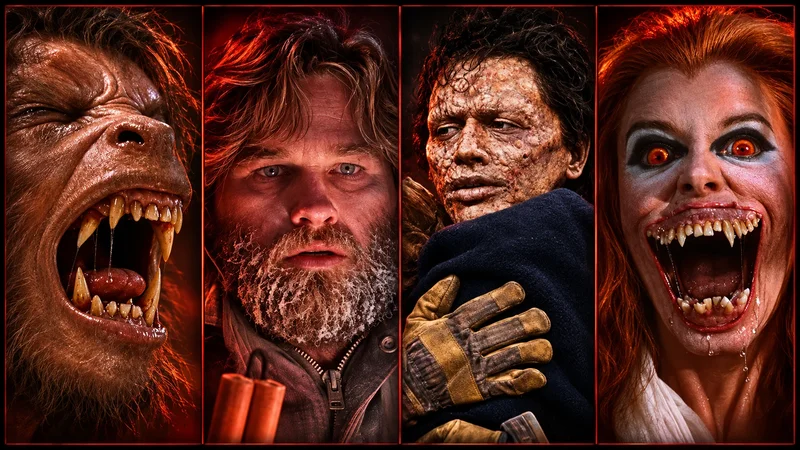
For slasher fans, the best 80s horror movies build tension through location, vulnerability, and a simple rule that makes escape difficult. They also created some of the decade’s most recognizable villains.
8. Friday the 13th (1980)
- Director: Sean S. Cunningham
- Genre: Campground slasher
- Key highlight: Crystal Lake’s violent history shadows new counselors
A group of young counselors arrives at Camp Crystal Lake to prepare it for reopening, ignoring warnings tied to the site’s troubled past. The simple setting gives the film an effective rhythm of separation, uncertainty, and escalating violence. Its rough-edged independent style helped establish a template for the American summer-camp slasher. Viewers returning because of the franchise’s later iconography should know that the original does not tell exactly the same killer-centered story as its sequels. Choose it for an influential, stripped-down slasher with graphic effects and a strong sense of vulnerable isolation.
9. A Nightmare on Elm Street (1984)
- Director: Wes Craven
- Genre: Supernatural slasher
- Key highlight: Freddy Krueger turns sleep into a lethal threat
Teenagers in a suburban neighborhood begin experiencing terrifying dreams involving a scarred attacker, and Nancy Thompson realizes that staying awake may be a matter of survival. Wes Craven makes an ordinary need, sleep, into the film’s central vulnerability. Heather Langenkamp gives Nancy a resourcefulness that makes the nightmare rules engaging, while Robert Englund’s Freddy offers an instantly recognizable villain. The visual imagination is more important than sheer body count: beds, ceilings, and familiar rooms become impossible spaces. It remains one of the decade’s strongest horror concepts.
10. Halloween II (1981)
- Director: Rick Rosenthal
- Genre: Slasher sequel
- Key highlight: The chase continues inside a nearly deserted hospital
Picking up directly after the events of the 1978 original, Halloween II moves Laurie Strode’s nightmare into a hospital where the surrounding quiet is as threatening as the killer. Jamie Lee Curtis returns, and the nearly empty corridors turn the location into a sequence of blind corners and vulnerable rooms. Rick Rosenthal directs a sequel with greater emphasis on explicit kills and franchise mythology. It works best immediately after the original Halloween, which was released in 1978 and is therefore outside this list. Choose it when you want to see how an influential slasher formula evolved in the next decade.
11. The Burning (1981)
- Director: Tony Maylam
- Genre: Summer-camp slasher
- Key highlight: A camp caretaker returns after a cruel prank
Teenagers at a summer camp face a killer linked to an earlier prank that went disastrously wrong. The story uses a familiar woodland setting, but its practical-effects violence and the growing anxiety of group activities give it a distinct cult reputation. Unlike a mystery built around elaborate motives, this film emphasizes how quickly a place associated with youthful freedom can feel unsafe. The cast’s casual conversations establish enough normal life to sharpen the later danger. Watch it for a darker camp-slasher alternative, especially if you are interested in early-1980s makeup effects.
12. Sleepaway Camp (1983)
- Director: Robert Hiltzik
- Genre: Camp slasher and psychological shock
- Key highlight: A summer camp hides cruelty and terrible secrets
Shy teenager Angela attends a summer camp with her cousin Ricky and finds herself surrounded by bullying, harsh authority figures, and a series of violent deaths. The movie’s uncomfortable social dynamics matter as much as its slasher setup, although some characterization and its treatment of gender identity are deeply problematic by current standards. Its cult reputation rests partly on a much-discussed ending, which is best left unspoiled for newcomers. Expect strong violence and a mean-spirited atmosphere. Choose it if you want a revealing example of how extreme and exploitative early slasher cinema could become.
13. Child’s Play (1988)
- Director: Tom Holland
- Genre: Supernatural killer-doll horror
- Key highlight: A seemingly ordinary toy contains a violent secret
A young boy receives a popular Good Guy doll, and his mother gradually suspects that the toy is connected to a series of violent events. Tom Holland makes the contrast between cheerful consumer packaging and murderous behavior central to the suspense. Catherine Hicks gives the family story credibility, while Brad Dourif’s voice helps establish Chucky as a villain with personality. The idea of a trusted object turning dangerous is simple and enduring. Although later installments lean further into comedy, the original is more suspenseful than newcomers may expect and is not appropriate for small children.
14. My Bloody Valentine (1981)
- Director: George Mihalka
- Genre: Holiday slasher
- Key highlight: A mining town’s Valentine’s celebration turns deadly
Young adults in a small mining community revive a Valentine’s Day dance despite warnings connected to an old tragedy. The mine itself becomes a crucial source of danger, giving this Canadian slasher an industrial atmosphere distinct from summer camps and suburban streets. George Mihalka uses tunnels, work equipment, and local legend to create an ominous setting that can feel frightening even before a killer appears. The movie is violent and tightly associated with its period, but the unusual location gives it lasting interest. Pick it for a holiday horror night with a grim, working-class backdrop.
Body Horror, Alien Threats, and Science Gone Wrong
For viewers drawn to physical transformations and unsettling science, the best 80s horror movies use makeup, sound, and paranoia to make bodies and identities seem frighteningly unstable.
15. The Thing (1982)
- Director: John Carpenter
- Genre: Science fiction and body horror
- Key highlight: Shape-shifting imitation destroys trust in Antarctica
Researchers at a remote Antarctic station encounter an organism capable of copying living creatures, making even longtime colleagues impossible to trust. Kurt Russell’s MacReady is compelling because he does not have a clean scientific answer or a reliable way to establish who is human. Rob Bottin’s practical creature effects remain astonishingly inventive, but the real horror is the breakdown of cooperation under pressure. Carpenter keeps the freezing landscape and isolated corridors oppressively bleak. Choose this for a masterful combination of paranoia, survival suspense, and extremely graphic transformations.
16. The Fly (1986)
- Director: David Cronenberg
- Genre: Tragic science fiction and body horror
- Key highlight: A teleportation experiment has devastating consequences
Inventor Seth Brundle seems close to perfecting a teleportation device until a seemingly tiny error turns his body into something he cannot control. Jeff Goldblum and Geena Davis give the film an emotional relationship that makes the transformation more than an effects showcase. Cronenberg treats scientific ambition, bodily vulnerability, and romantic intimacy as parts of one tragedy. The makeup effects are exceptionally graphic, but their impact comes from the viewer’s growing sympathy for the people involved. Watch it when you want horror that is disgusting and heartbreakingly human in equal measure.
17. Videodrome (1983)
- Director: David Cronenberg
- Genre: Media paranoia and body horror
- Key highlight: Violent broadcasts begin changing a television executive
A cable television executive searches for shocking programming and discovers a mysterious broadcast that appears to affect the mind and body. James Woods’s Max Renn becomes increasingly unable to distinguish the screen’s influence from his own experiences. Cronenberg’s grotesque imagery transforms television technology into a physical threat, anticipating later fears about media manipulation without simply predicting the internet. The film is abstract, sexually explicit, and often disorienting, so it is far from an easy popcorn watch. It belongs on this list for its uncompromising formal invention and unnerving questions about entertainment consumption.
18. Scanners (1981)
- Director: David Cronenberg
- Genre: Psychic science fiction horror
- Key highlight: Telepathic powers become a violent battleground
People with extraordinary mental abilities are drawn into a struggle between competing organizations and a dangerous figure whose power seems difficult to contain. Cronenberg combines corporate conspiracy with the unnerving idea that a human mind might become a weapon. Its notorious practical-effects imagery is unforgettable, but the movie’s greater interest lies in how control is exercised over people who are different. The atmosphere is chilly and more plot-driven than The Fly. Choose it for a formative example of science fiction horror where a psychological concept produces very physical consequences.
19. The Blob (1988)
- Director: Chuck Russell
- Genre: Creature feature and body horror
- Key highlight: An expanding organism consumes a small town
A strange gelatinous life-form crashes near a community and begins absorbing anything in its path, leaving local teenagers to question the authorities’ explanation. Chuck Russell’s remake takes a deceptively simple 1950s monster idea and embraces the possibilities of elaborate 1980s practical effects. The creature’s unpredictable movement gives the film a relentless sense of physical danger, and familiar small-town locations become traps. It is considerably gorier than the title’s playful sound suggests. Choose it for inventive monster action and a lively example of how remakes can reinvent their originals.
20. The Hidden (1987)
- Director: Jack Sholder
- Genre: Alien possession and crime horror
- Key highlight: A body-hopping entity leaves a trail of chaos
An apparently ordinary criminal investigation grows stranger as a string of violent offenders seems connected by behavior that no human suspect should share. Kyle MacLachlan and Michael Nouri make an engaging investigative pair, with the newcomer carrying knowledge the detective cannot easily accept. Jack Sholder combines chase scenes, police procedural tension, and a grotesque extraterrestrial premise. The film moves more quickly than many meditative science fiction horrors, and its darkly comic touches make the bizarre rules entertaining. Pick it for a cult genre hybrid that still has a strong central mystery.
21. They Live (1988)
- Director: John Carpenter
- Genre: Alien conspiracy and science fiction horror
- Key highlight: Special glasses expose a hidden power structure
A drifting laborer discovers a pair of sunglasses that reveal subliminal messages and the alien figures concealed beneath apparently ordinary public life. Roddy Piper’s Nada becomes an unlikely investigator whose discovery turns advertising, wealth, and familiar streets into sources of suspicion. Carpenter blends social satire with action and a rough sense of humor, yet the idea of invisible influence gives the story a genuinely paranoid foundation. The film is less graphic than The Thing but still includes strong violence. Choose it for a sci-fi horror thriller that makes consumer culture look like part of a frightening conspiracy.
22. Dead Ringers (1988)
- Director: David Cronenberg
- Genre: Psychological and medical body horror
- Key highlight: Identical twins unravel inside a shared professional life
Twin gynecologists Elliot and Beverly Mantle share a medical practice and have become so dependent on their shared identity that the arrival of a patient destabilizes them. Jeremy Irons creates two distinct people without relying on easy comic differences. Cronenberg uses clinical spaces, custom surgical instruments, and emotional obsession to make the body feel vulnerable even without constant gore. This is a bleak character study, not a conventional monster movie, and its medical and sexual material is deeply unsettling. Choose it for psychological horror built from intimacy, professional power, and the impossibility of remaining two people at once.
Undead Nightmares, Demons, and Forbidden Rituals
Among the best 80s horror movies, stories about demons, undead outbreaks, and forbidden experiments could be brutal, surprisingly funny, or socially pointed. Their physical effects and darker subject matter often make them adult viewing.
23. The Evil Dead (1981)
- Director: Sam Raimi
- Genre: Cabin horror and demonic possession
- Key highlight: A recorded incantation unleashes terror in the woods
Five friends arrive at a remote cabin and discover material that brings a malevolent force into their isolated retreat. The modest budget becomes an asset: Sam Raimi’s restless camera and harsh sound design make the surrounding woods feel violently alive. Bruce Campbell’s Ash is not yet the swaggering comic hero audiences know from later entries; this first film is far more ferocious and relentless. Its practical effects and disturbing possession imagery are intense. Choose it for an inventive independent horror landmark that feels almost physically exhausting by design.
24. Evil Dead II (1987)
- Director: Sam Raimi
- Genre: Splatter horror comedy
- Key highlight: Ash fights demonic forces with increasingly absurd desperation
Returning to the cabin premise, Sam Raimi pushes the experience toward a gleeful collision of gore, slapstick, and impossible physical punishment. Bruce Campbell turns Ash’s increasingly desperate survival attempts into a memorable form of horror performance, with facial expressions and bodily mishaps doing as much work as the dialogue. The sequel partly retells earlier material rather than behaving like a simple next chapter. Its blood and grotesque effects are substantial, but the comic invention is central. Choose it for a movie that demonstrates how horror can become more disturbing and funnier at the same time.
The exaggerated camera movement and grotesque humor helped build an influential horror-comedy vocabulary. For a comparison with later approaches to dread and genre experimentation, explore our best modern horror movies selection, which looks at how filmmakers adapted such traditions after 2000.
25. Day of the Dead (1985)
- Director: George A. Romero
- Genre: Zombie horror and social satire
- Key highlight: Scientists and soldiers clash beneath an undead world
A small group of survivors works inside an underground military facility while the dead dominate the surface, but the human factions can barely agree on what survival should involve. George A. Romero makes competing ideas about science, military command, and compassion the heart of the story. Tom Savini’s effects make the violent breakdown extraordinarily graphic, yet the most enduring question concerns how humans treat one another when normal institutions disappear. Choose it for politically charged zombie horror that is slower and more confrontational than a constant chase movie.
26. The Return of the Living Dead (1985)
- Director: Dan O’Bannon
- Genre: Punk zombie horror comedy
- Key highlight: A warehouse accident creates an unstoppable outbreak
Two employees accidentally release a dangerous substance from a military container, triggering an outbreak that spreads across a cemetery and surrounding town. Dan O’Bannon combines punk music, frantic ensemble performances, and a particularly bleak sense of humor. The zombies are frightening because familiar movie assumptions about stopping them turn out to be unreliable. Even the funniest characters become desperate as the situation deteriorates. This is an excellent pick for adults who enjoy energetic horror comedy, with strong gore and an attitude that is very different from Romero’s more solemn undead films.
27. Re-Animator (1985)
- Director: Stuart Gordon
- Genre: Mad-scientist gore comedy
- Key highlight: A medical student tests a serum that revives the dead
Herbert West arrives at medical school with a dangerous conviction that he can overcome death through chemistry. Jeffrey Combs plays the arrogant researcher with such intense seriousness that his growing disasters become darkly funny. Stuart Gordon takes the science-gone-wrong premise to grotesque extremes, but the film’s comic power comes from its refusal to let West acknowledge the obvious moral problem with his experiments. Sexual violence and graphic gore make it strictly adult viewing. Choose it for a cult combination of outrageous practical effects and scientific arrogance pushed past every sensible limit.
28. Demons (1985)
- Director: Lamberto Bava
- Genre: Italian demonic outbreak horror
- Key highlight: A movie-theater screening becomes a monstrous trap
Audience members attending a mysterious screening in Berlin discover that the film they came to watch is connected to a violent transformation spreading through the theater. The concept makes a cinema itself into the site of the horror, blurring the boundary between the on-screen nightmare and the people watching. Lamberto Bava favors explosive momentum, bright makeup effects, and heavy-metal energy over careful realism. It is extremely bloody and gleefully excessive. Choose it for an Italian cult movie that turns the shared excitement of going to the movies into an escalating survival crisis.
29. Hellraiser (1987)
- Director: Clive Barker
- Genre: Supernatural and body horror
- Key highlight: A mysterious puzzle box opens a realm of suffering
A puzzle box brings a destructive supernatural force into a family home, and the people connected to it face consequences far beyond ordinary curiosity. Clive Barker directs an adaptation of his own fiction with an unusual emphasis on desire, betrayal, and bodily limits. The Cenobites are memorable, but the story’s unsettling domestic relationships give the horrific imagery its dramatic context. This is mature horror with extreme gore and sexual themes rather than a conventional ghost story. Choose it for a distinctive mythology that makes temptation and physical pain inseparable.
Vampires, Werewolves, and Gothic Creatures
Vampires and werewolves were reinvented through youthful rebellion, road movies, and rural folklore. The best 80s horror movies in this category are as concerned with outsiders as they are with monsters.
30. An American Werewolf in London (1981)
- Director: John Landis
- Genre: Werewolf horror comedy
- Key highlight: A backpacking trip becomes a brutal transformation
Two American travelers are attacked while crossing the English moors, leaving survivor David facing strange warnings and an increasingly alarming future. John Landis mixes casual conversations and bleak humor with violence that can become shocking without notice. Rick Baker’s transformation effects give the werewolf curse a physical brutality that transformed genre expectations. The film also captures the loneliness of being disbelieved while your own body changes. Choose it for an unforgettable blend of dark comedy, tragic romance, and creature horror that takes both laughs and scares seriously.
31. The Howling (1981)
- Director: Joe Dante
- Genre: Werewolf mystery and creature horror
- Key highlight: A traumatized reporter visits an unsettling retreat
Television journalist Karen White travels to a therapy community after a frightening encounter, only to discover that the retreat’s residents have a dangerous secret. Joe Dante blends media satire and shifting suspicions with elaborate werewolf effects. Dee Wallace makes the reporter’s fear credible, and the film’s playful references keep it from adopting an entirely solemn tone. The remote community adds an atmosphere of distrust that supports its monster transformations. It is a good companion to An American Werewolf in London, offering a more conspiratorial look at lycanthropy.
32. Fright Night (1985)
- Director: Tom Holland
- Genre: Vampire horror comedy
- Key highlight: A teenager suspects his neighbor is a vampire
Charley Brewster is certain that the charming man next door is a vampire, but persuading anyone to believe him proves almost as difficult as dealing with the danger. Chris Sarandon gives the neighbor an unnerving charm, while Roddy McDowall’s aging horror host brings a wonderful mix of vanity and vulnerability. Tom Holland makes excellent use of suburban proximity: the monster can be seen through an ordinary bedroom window. Choose it for an affectionate vampire film with colorful effects, amusing genre awareness, and actual suspense beneath the jokes.
33. The Lost Boys (1987)
- Director: Joel Schumacher
- Genre: Teen vampire horror
- Key highlight: A coastal town hides a dangerous youth subculture
After moving with his family to Santa Carla, teenager Michael is drawn into a stylish group of young outsiders, while his younger brother Sam begins suspecting a frightening secret. Joel Schumacher leans into music, fashion, and a sunlit boardwalk atmosphere that makes the vampire threat part of the town’s rebellious allure. Corey Haim and Corey Feldman add humor through Sam’s friendship with self-appointed vampire experts. Its lively energy and strong visual identity make it a natural pick for viewers who enjoy youth culture and supernatural danger in the same film.
34. Near Dark (1987)
- Director: Kathryn Bigelow
- Genre: Vampire western and road horror
- Key highlight: A farm boy encounters a roaming nocturnal gang
Caleb’s attraction to a mysterious young woman introduces him to a violent group traveling through the American Southwest after dark. Kathryn Bigelow strips familiar vampire imagery of aristocratic castles and replaces it with bars, roads, and dusty horizons. Adrian Pasdar’s central performance gives the romance a vulnerable perspective, while the supporting gang is genuinely threatening. The soundtrack and nocturnal photography build an atmosphere of seductive danger. Choose it for adult vampire horror with western texture and a strong sense of moral ambiguity rather than campy creature fun.
35. Pumpkinhead (1988)
- Director: Stan Winston
- Genre: Rural creature feature and revenge horror
- Key highlight: A grieving father summons a dangerous avenger
After a devastating family loss, a rural shopkeeper seeks supernatural revenge and calls forth a creature that begins hunting the people he blames. Stan Winston’s background in creature effects gives the monster a memorable physical presence, but the film’s real strength is the emotional cost of a wish that cannot be casually undone. Lance Henriksen brings gravity to the central role, making the danger more than an excuse for elaborate kills. Its rural setting and folkloric rules give the movie an unusual personality. Choose it for mournful monster horror rather than an uncomplicated revenge fantasy.
36. The Company of Wolves (1984)
- Director: Neil Jordan
- Genre: Gothic fantasy and werewolf horror
- Key highlight: Little Red Riding Hood becomes a dangerous dream
A young girl’s dreams transform familiar fairy-tale warnings into stories of wolves, desire, and the risks of entering the forest. Neil Jordan draws on Angela Carter’s fiction to create layered episodes that feel closer to dangerous folklore than a straightforward monster hunt. Elaborate practical transformations give the film memorable shocks, while its dreamy construction invites more than one interpretation. It is an adult-leaning Gothic fantasy with sexual symbolism and violent imagery, not a children’s storybook film. Choose it for poetic visuals and a distinctly British approach to fairy-tale horror.
Italian Giallo and International Nightmares
International horror is essential to the decade rather than a side note. Italian giallo, surreal supernatural filmmaking, and European psychological experiments broaden the era beyond American slasher formulas.
37. Tenebrae (1982)
- Director: Dario Argento
- Genre: Italian giallo and slasher mystery
- Key highlight: A crime writer faces murders echoing his fiction
An American mystery novelist visiting Rome discovers that a killer appears to be borrowing details from his latest book. Dario Argento turns authorship, spectatorship, and suspicion into a stylized murder puzzle with striking camera movement. The crisp, modern-looking surroundings contrast with the violence, making everyday architecture feel exposed and dangerous. The mystery’s pleasure comes from its uncertain perspectives rather than an easy supernatural explanation. Choose it for sleek Italian suspense, elaborate set pieces, and a film that seems fascinated by the disturbing relationship between violent stories and their audiences.
38. Phenomena (1985)
- Director: Dario Argento
- Genre: Italian supernatural giallo
- Key highlight: A student communicates with insects during a murder mystery
An American girl at a Swiss boarding school discovers that her unusual connection with insects may help explain a string of killings. Jennifer Connelly gives the protagonist a vulnerable determination, while Donald Pleasence appears as a scientist drawn into the investigation. Argento mixes dreamlike imagery, an eccentric soundtrack, and wild plot turns that refuse to obey ordinary mystery rules. The film is gory, strange, and occasionally bewildering, which is precisely its appeal for devoted fans. Choose it when you want a supernatural murder mystery unlike the polished conventions of mainstream American horror.
39. The Beyond (1981)
- Director: Lucio Fulci
- Genre: Italian supernatural gore horror
- Key highlight: A Louisiana hotel conceals a gateway to Hell
A woman inherits a deteriorating New Orleans hotel and discovers that the property is tied to frightening events and an opening into something beyond the living world. Lucio Fulci builds the film around nightmare imagery, unexpected violence, and a sense that normal cause and effect may be collapsing. The soundtrack and decaying setting give the horrors an atmosphere of doom even when the story becomes deliberately fragmented. The gore is severe. Choose it for viewers interested in the sensorial power of Italian horror, where mood matters more than solving every question.
40. City of the Living Dead (1980)
- Director: Lucio Fulci
- Genre: Italian occult and zombie horror
- Key highlight: A small town becomes the center of a supernatural crisis
A psychic senses a catastrophic threat after a priest’s death, and the attempt to stop it draws several people toward the town of Dunwich. Fulci favors grotesque apparitions, sudden ruptures of ordinary reality, and images that can feel like pieces of a fever dream. The investigation provides a route through the story, but atmosphere and extremely graphic effects are the real focus. This is not a conventional zombie chase with clear rules. Choose it if you appreciate Italian occult horror at its most disorienting and are comfortable with relentless bodily violence.
41. Possession (1981)
- Director: Andrzej Żuławski
- Genre: Psychological and surreal body horror
- Key highlight: A marriage collapses into a terrifying mystery
In divided Berlin, Mark returns to find that his wife Anna wants to end their marriage, and his desperate attempts to understand her behavior lead him toward an appalling secret. Isabelle Adjani and Sam Neill make the relationship feel almost unbearably volatile, while Żuławski directs with frantic emotional intensity. The film folds political anxiety, jealousy, identity, and grotesque supernatural imagery into a single disturbing experience. It is sexually explicit, violent, and far more demanding than a conventional creature feature. Choose it for an experimental, emotionally punishing film that resists easy interpretation.
42. Santa Sangre (1989)
- Director: Alejandro Jodorowsky
- Genre: Surreal psychological and cult horror
- Key highlight: A circus performer’s family history becomes a nightmare
A young man shaped by a traumatic childhood in a circus becomes drawn back into a disturbing relationship with his mother. Alejandro Jodorowsky builds the film from theatrical imagery, religious spectacle, and increasingly unsettling questions about control and identity. Its tone moves between tragic intimacy and deliberately shocking surrealism, which makes it difficult to compare with mainstream slashers. First associated with the late-1980s festival circuit and released in some markets in 1990, it is included here for its 1989 debut. Choose it for adventurous adult viewers comfortable with extreme imagery and an unconventional narrative.
Horror Comedy, Mischief, and Monster-Loving Cult Favorites
Some of the best 80s horror movies use jokes to heighten rather than remove their monsters. These lighter selections still include dark images and unsettling ideas, but comic personality becomes a major reason to watch.
43. Gremlins (1984)
- Director: Joe Dante
- Genre: Creature horror comedy
- Key highlight: A holiday gift multiplies into chaotic little monsters
A teenager receives a mysterious creature with strict care rules, and a series of mistakes fills his small town with destructive gremlins. Joe Dante combines bright holiday decoration and family comedy with genuinely nasty creature mischief, creating a mood that shifts unexpectedly from cute to alarming. The physical puppetry keeps the monsters expressive even as their behavior becomes violent. It is often associated with family movie nights, but the scares and dark jokes can unsettle younger children. Choose it for a lively mixture of Christmas imagery, small-town chaos, and gleefully mischievous creature effects.
44. The Monster Squad (1987)
- Director: Fred Dekker
- Genre: Monster adventure and horror comedy
- Key highlight: Kids confront a team of classic movie creatures
A group of young horror fans discovers that Dracula and several legendary monsters are no longer confined to the movies they love. The children must use their enthusiasm and teamwork to prevent the creatures from gaining dangerous power. Fred Dekker balances affectionate references to classic monster cinema with a surprisingly brisk adventure structure. The practical costumes make the creatures tangible, while the friendships give the story its charm. Some language and frightening moments reflect a rougher 1980s approach to children’s adventure. Choose it for nostalgic monster fun with more bite than a harmless cartoon.
45. Beetlejuice (1988)
- Director: Tim Burton
- Genre: Supernatural fantasy and dark comedy
- Key highlight: Two ghosts hire a dangerous specialist to reclaim their home
A recently deceased couple becomes frustrated when an unbearable new family moves into their house, leading them to seek help from the chaotic spirit Beetlejuice. Tim Burton makes the afterlife feel like a strange bureaucracy and fills the home with playful practical effects. Michael Keaton’s outrageous performance provides the loudest humor, but the quieter joke is that the ghosts are almost too polite to succeed at haunting anyone. There are macabre images, suggestive jokes, and occasional frightening moments. Choose it as a gateway to Gothic comedy rather than one of the decade’s truly terrifying nightmares.
Why Do 1980s Horror Movies Still Attract New Fans?
Practical effects are an obvious attraction, but they are not the whole explanation. The decade repeatedly made fear concrete: a latex transformation, an impossible puppet, a corridor whose dimensions suddenly feel wrong. Films like The Thing and The Fly ask viewers to look directly at disturbing changes, while The Shining and The Changeling invite anxiety about what cannot be completely seen. That variety gives horror fans a way to move from spectacle to atmosphere without leaving the period.
Many of the best 80s horror movies also work as time capsules. The Lost Boys captures the connection between vampire mythology and youth culture; Videodrome reflects anxiety about televised images; and They Live attacks consumer manipulation through an alien-conspiracy premise. Watching several approaches together reveals that the decade did not create a single formula, even if certain masks and catchphrases became exceptionally famous.
For a first marathon, match the intensity to your group. Pair Poltergeist with The Changeling for ghostly suspense, The Thing with The Fly for deeply unsettling practical effects, or Fright Night with Gremlins for more playful creature stories. Viewers new to extreme gore should approach Re-Animator, The Beyond, Hellraiser, and Possession with particular care. Different versions and edits of some older films may also affect what is shown.
Frequently Asked Questions About 80s Horror Movies
What are the best 80s horror movies to watch first?
For a broad introduction, try The Shining, The Thing, A Nightmare on Elm Street, Poltergeist, and The Lost Boys. Together they cover psychological dread, body horror, supernatural slashers, haunted homes, and stylish vampire stories. Check each film’s content before watching with younger audiences.
Which 1980s horror movies have the best practical effects?
The Thing, The Fly, An American Werewolf in London, The Blob, and Hellraiser are especially rewarding for viewers interested in physical makeup and creature construction. Their effects often involve intense gore and disturbing transformation imagery.
Are there good 80s horror films without constant gore?
Try The Changeling or The Fog for atmosphere-driven suspense. The Dead Zone emphasizes moral unease and psychic mystery, although it still contains disturbing moments. None is guaranteed to be free of violence or other mature themes.
Which 1980s horror movies combine scares with comedy?
Evil Dead II, The Return of the Living Dead, Fright Night, Gremlins, and Beetlejuice combine horror elements with very different styles of humor. The first two contain strong gore; Gremlins and Beetlejuice are less relentless but can still scare children.
What international 80s horror movies are worth discovering?
Italy offers Tenebrae, Phenomena, The Beyond, and City of the Living Dead. Possession brings a European psychological perspective, while Santa Sangre explores surreal horror through an international production. These are mostly demanding adult films rather than simple ghost stories.
Final Thoughts
The best way to revisit this decade is to explore more than one type of fear. A haunting can be built from silence, a killer from a nightmare, and a creature from extraordinary handmade effects. Begin with an approachable classic, then follow the craft or filmmaker that interests you into a stranger corner of the period. The most memorable discovery may be a film whose style you would never have chosen from its poster alone.